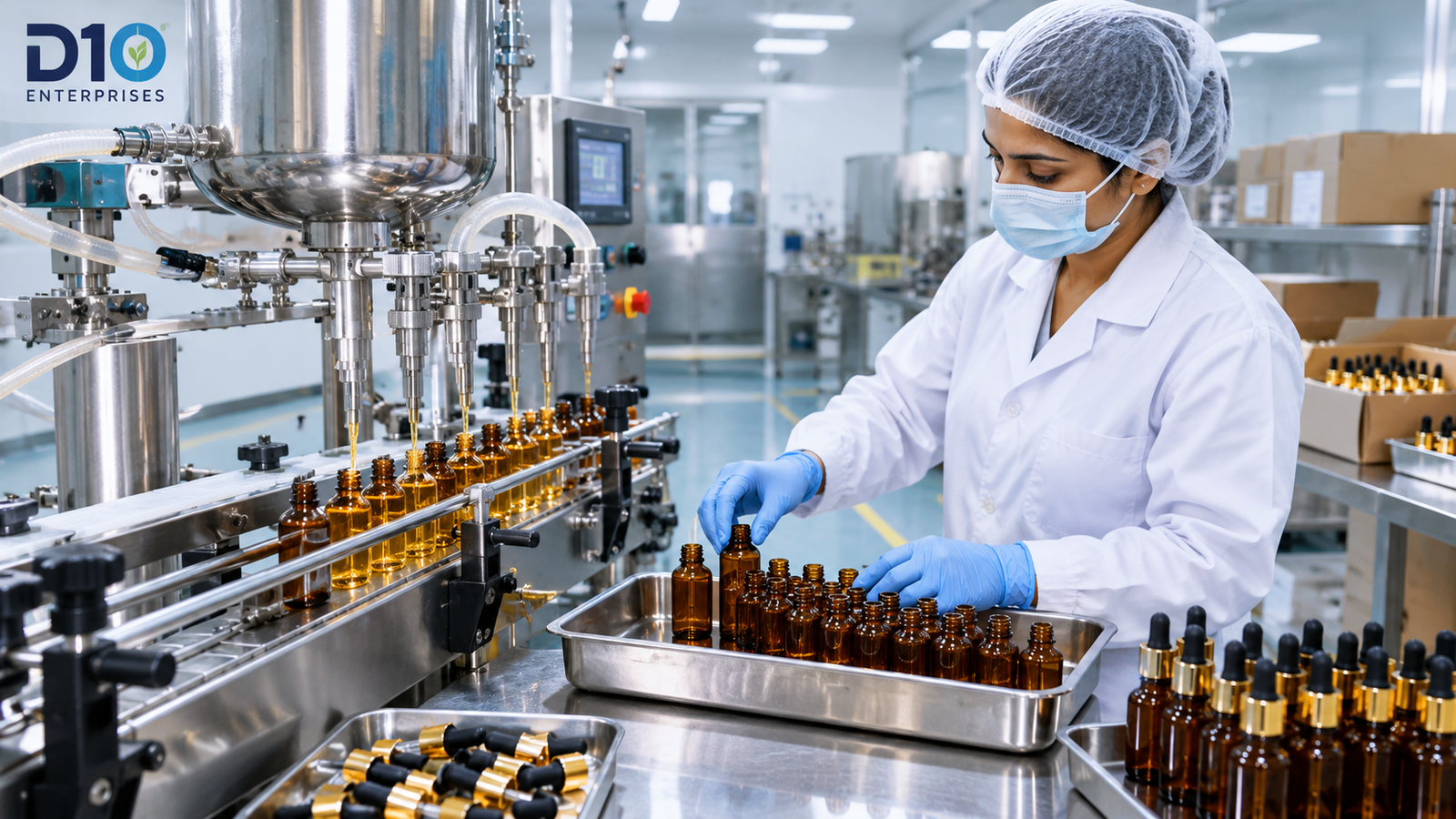
A serum is a small bottle with a big job. It carries the active ingredients, it sells at a higher price than a basic cream and it is the product customers judge a brand by. That is why serums are also where first-time founders get hurt most, by a formula that separates in the monsoon, a dropper that leaks or a claim on the box that a regulator would not like. If you are looking for a skincare serum third party manufacturer Mumbai brands can work with, this guide explains what to check before you place an order.
It covers how contract manufacturing works for serums, what makes them harder than they look, what the law says about anti-ageing and other claims, and what to ask D10 Enterprises if you plan to build your brand in Mumbai and manufacture elsewhere.
Why Mumbai Brands Manufacture Outside the City
Mumbai has the customers, the dermatologists, the influencers and the online sellers a serum brand needs. It does not have affordable space for clean mixing rooms, filling lines and ingredient storage. So most beauty brands in the city run marketing and sales locally and use a licensed factory in another state.
D10 Enterprises works from Ajit Nagar, Ambala Cantt, Haryana, and has no Mumbai facility. For a brand owner, what matters is honest communication, quick samples and dispatch that arrives on time.
What D10 Lists for Serums
According to its website, D10 Enterprises has a dedicated serum manufacturing page, alongside cream, face wash, face scrub, derma cosmetics, organic cosmetics, herbal cosmetics and colour cosmetics. That range suits a brand planning a small set of products, for example a serum, a moisturiser and a cleanser, from one manufacturer. The product catalog shows the wider list.
Why Serums Are Harder Than They Look
A serum is lightweight, which means there is very little in the bottle to hide behind. Popular actives such as vitamin C, niacinamide and retinol have become staples of urban skincare in India. Each has its own temper. Vitamin C changes colour and loses strength when exposed to air and light. Retinol is sensitive to light and air as well. Niacinamide and acids depend on the right pH to behave. Preservatives need to protect a water based formula without irritating skin.
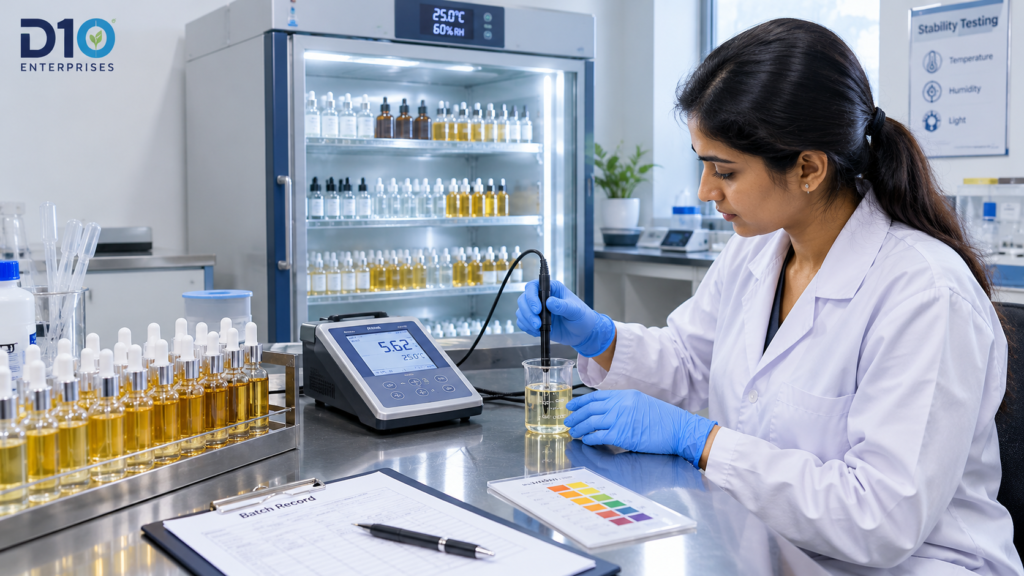
That is why you should ask any manufacturer how they test stability, what pH they target and what packaging they recommend. Dark glass, airless pumps and well fitting droppers are not decoration, they protect the formula. Mumbai’s heat and monsoon humidity add real stress, so ask for stability results in warm conditions, not only on paper.
The Claims Problem, Especially for Anti-Ageing
In India, cosmetics are regulated under the Drugs and Cosmetics Act, 1940 and the Cosmetics Rules, 2020. The legal idea behind a cosmetic is that it does not affect the structure or functions of the body and does not treat, mitigate or prevent disease. Drugs are the opposite, they include articles meant to affect the structure or function of the body.
This is where anti-ageing wording gets dangerous. Rule 36 of the Cosmetics Rules says a cosmetic must not claim to convey a false or misleading idea, and compliance consultancies note that claims implying permanent structural change, such as restructuring collagen at a cellular level, fall outside cosmetic territory. One borderline products guide lists a claim such as “reduces wrinkles and restores collagen” as likely a drug claim. CDSCO has also warned in 2026 that prohibited ingredients and misleading claims on labels are violations.
Does that mean you cannot sell an anti-aging serum? No. It means you describe appearance, not biology. Wording about improving the look of fine lines or the feel of skin is a different thing from promising to rebuild skin structure. If you plan to call yourself an anti-aging contract manufacturer’s client in your marketing, take the same care with every line. Ask your manufacturer to review your claims before artwork goes to print. D10 lists regulatory operations and support and a quality, safety and compliance programme, so ask exactly what they check.
Also confirm that the factory holds a valid cosmetics manufacturing licence. Labels must follow Rule 34 of the Cosmetics Rules, and packaged goods also fall under the Legal Metrology (Packaged Commodities) Rules, 2011.
White Label Serum Services Versus Custom Formulation
White label serum services mean choosing a formula already in the manufacturer’s range and putting your brand on it. It is quicker, with lower minimum orders and no development time. It suits a founder whose edge is branding, content and distribution.
Custom formulation builds a serum around your brief: a particular active, a texture suited to Mumbai’s humidity, a fragrance free version for sensitive skin. It takes longer and needs more sample rounds, but the product is yours alone. D10 lists custom formulation solutions and private branding and labeling as separate services. If you later want to hold your own licence, it also lists loan licensing services.
How the Process Usually Runs
You send a brief: skin concern, key actives, texture, fragrance, packaging style and first order size. The manufacturer proposes a formula and sends samples. You test them on real skin over weeks, not days, and ask for changes. After approval, packaging and label artwork are finalised and checked against the labelling rules and your claims. Production runs in batches, each is tested, and finished stock is dispatched.
For a Mumbai brand, ask how filled bottles are packed for transit. Droppers and pumps can leak in freight, and a cracked glass bottle costs more than money.
Questions to Ask a Contract Facial Product Producer
- Do you hold a valid cosmetics manufacturing licence?
- Have you made serums with my kind of actives before?
- How do you test stability, pH and preservation?
- What packaging do you recommend for my actives?
- Will you review my label claims before printing?
- What is the minimum order quantity for a first batch?
- How long does dispatch take, and how do you pack for Mumbai?
What Shapes the Price
Cost depends on the actives and their quality, batch size, packaging, label printing, testing and freight. Serum packaging often costs as much as the formula, since glass droppers and airless pumps add up. Ask for a written breakdown by stage, formulation, filling, packaging, labelling and testing, so you can compare quotes properly.
Common Mistakes
The first is writing structural claims such as “rebuilds collagen” on a cosmetic. The second is choosing clear packaging for a light sensitive active. The third is skipping stability testing in warm conditions. The fourth is testing a sample for a few days and approving it. The fifth is launching with too many products at once.
Getting Started
Before contacting any manufacturer, write a short brief: skin concern, key actives, texture, fragrance preference, pack style, intended claims, first order size and launch date.
To speak with D10 Enterprises, read the about page first, then reach them through the contact page, by phone on +91-7988374621, or by email at d10enterprisesambala@gmail.com. The address is 226/2 and 226/3, Ajit Nagar, Ambala Cantt, Haryana 133001. You can also start from the D10 Enterprises homepage.