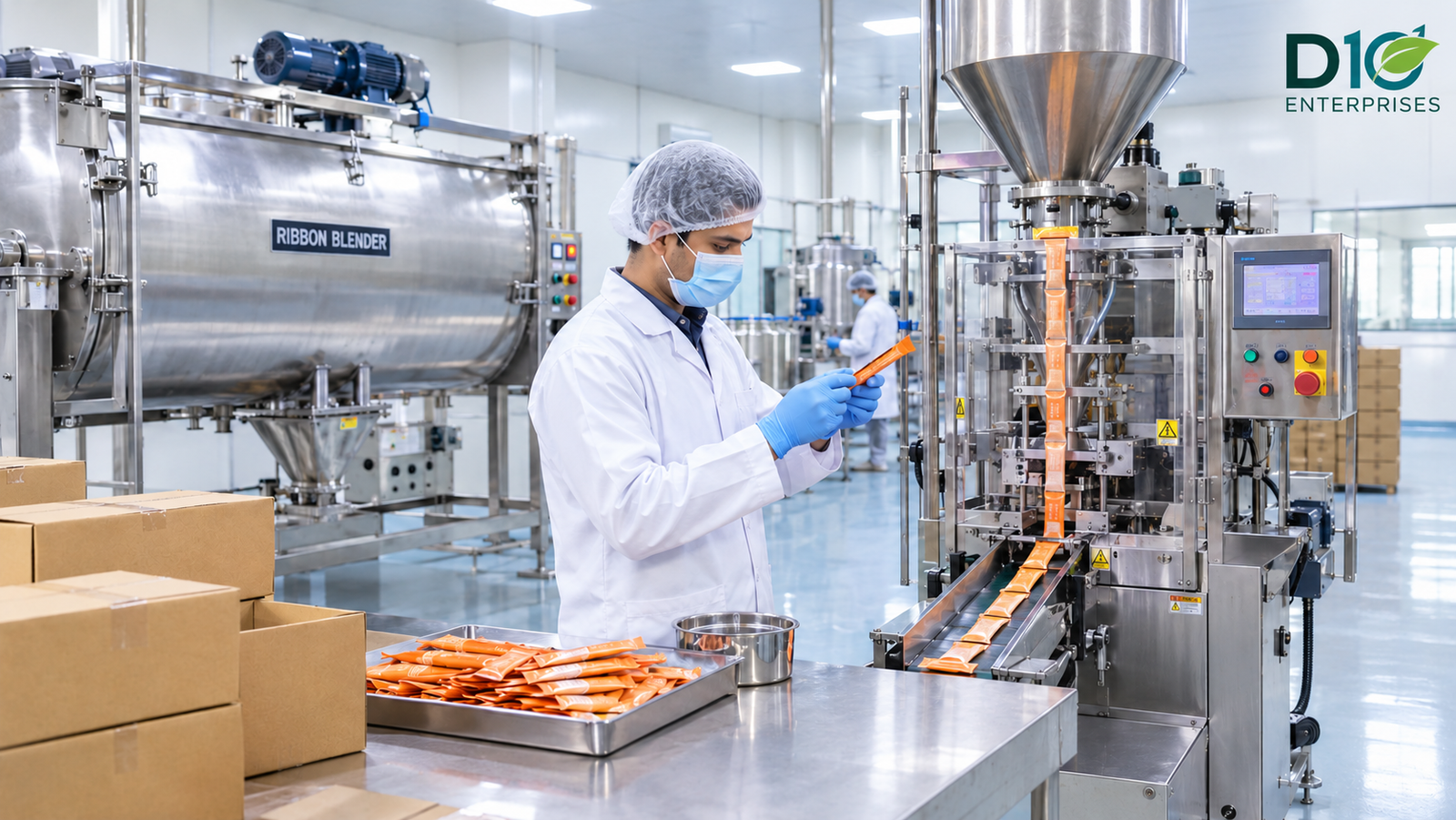
Energy drinks look like an easy product. A can, a flavour, a caffeine number and a good logo. Then a founder starts planning and finds out that even the name on the front of the can is regulated. If you are searching for an energy drink third party manufacturer Delhi brands can work with, the most useful first step is to understand what the law calls your product and what kind of factory you actually need.
This guide covers the caffeine rules, the label warnings, the difference between ready-to-drink and powder formats, how contract manufacturing works for this category and what to ask D10 Enterprises if you plan to build your brand in Delhi and manufacture elsewhere.
Why Delhi Brands Manufacture Outside the City
Delhi has a young, fitness aware customer base, a big gym scene and strong online selling. What it does not have is affordable space for blending halls, filling lines and storage. So most beverage and supplement brands in the capital region run marketing and sales locally and use a licensed factory elsewhere.
D10 Enterprises works from Ajit Nagar, Ambala Cantt, Haryana, and has no Delhi facility. For a brand owner, what counts is honest communication, good samples and dispatch that arrives on time.
What the Law Calls an Energy Drink
In India, a non-alcoholic beverage with more than 145 mg of caffeine per litre is labelled as a “caffeinated beverage”, and the caffeine content must not exceed 300 mg per litre from any source, according to trade press coverage of the FSSAI notification. Such drinks must prominently carry a caution that they are not recommended for children, pregnant and lactating women or persons sensitive to caffeine. The same report says that in other respects these drinks follow the standards for carbonated water.
Naming is the other trap. One regulatory training site reports that FSSAI has no specific product standard for an “energy drink” category and has directed businesses to drop that term for high caffeine beverages, treating it as misbranding. I could not confirm the date of that directive, so check the current position with your manufacturer and a food regulatory consultant before you finalise the product name and front label. The practical lesson is simple: do not print “energy drink” on a label until you have confirmed it is allowed.
Please also check the exact caffeine limit and label wording in the current regulation, because limits and wording have changed over the years. Ask your manufacturer to work from the latest text, not from articles.
What Format Are You Making?
This is the question that decides which factory you need. A ready-to-drink beverage in a can or bottle needs liquid blending, often carbonation, filling and sealing, and heat or other treatment so it stays safe on a shelf. A powder or sachet drink mix is made on blending and filling lines and mixed by the customer with water. Syrups and concentrates sit in between.
D10’s nutraceuticals manufacturing page lists syrup, softgel capsules, protein powders and mouth spray. The nutraceutical catalogue shared by the company also covers tablets and capsules, sachets, powders and oral spray, and gummies are part of what D10 makes as well. Ready-to-drink bottled or canned beverages are not listed on the public pages. So if your plan is a canned drink, ask D10 directly whether they can make it. If your plan is a powder or sachet mix, or a syrup, the listed formats are a closer match. The product catalog shows the wider range.
Licences and Labels
Beverages and supplements fall under food safety law, so ask to see the factory’s FSSAI licence and check that it covers your product type. If your product is positioned as a health supplement rather than a beverage, FSSAI’s 2022 nutraceutical rules apply, including the “HEALTH SUPPLEMENT” label wording, permitted ingredient schedules and the rule that health supplements cannot claim to cure or treat disease. Health supplement manufacturing falls in FSSAI’s mandatory Central License category. A caffeinated drink and a supplement are not the same legal product, so decide early which one you are building.
Claims matter too. FSSAI’s Advertising and Claims Regulations, 2018 allow listed claims and require other claims to be approved in advance and scientifically backed, so promises about performance, focus or endurance need checking before they go on a pack. D10 lists regulatory operations and support and a quality, safety and compliance programme, so ask exactly what they review.
White Label Drink Services Versus Custom Formulation
White label drink services mean choosing a formula the manufacturer already makes and putting your brand on it. It is quicker, with lower minimum orders and no development time.
Custom formulation builds a recipe around your brief, such as a flavour, a sweetener choice, a vitamin blend or a sugar free version. It takes longer and needs more sample rounds, especially for taste, because flavour is the whole product in this category. D10 lists custom formulation solutions and private branding and labeling as separate services. If you later want to hold your own licence, it also lists loan licensing services.
How the Process Usually Runs
You send a brief: format, flavour, caffeine target, other ingredients, pack style and first order size. The manufacturer checks the formula against the rules, proposes a recipe and sends samples. You taste them, ask for changes and approve one. After approval, packaging and label artwork are finalised and checked against the caffeine caution, claims and naming rules. Production runs in batches, each is tested, and finished stock is dispatched.
For a Delhi brand, ask about shelf life in summer heat. Powders absorb moisture, and drinks can change in flavour with heat, so packaging and storage advice matter.
Questions to Ask a Contract Beverage Producer
- Do you hold an FSSAI licence that covers my product type?
- Can you make my format, ready-to-drink, powder, sachet or syrup?
- How do you control and test caffeine content in each batch?
- Will you check my product name and label wording against the current rules?
- How many sample rounds are included?
- What is the minimum order quantity for a first batch?
- How do you pack for transit to Delhi in hot weather, and how long does dispatch take?
What Shapes the Price
Cost depends on the format, ingredients, flavour system, batch size, packaging, label printing, testing and freight. Canned or bottled drinks involve heavier packaging and freight than sachets. Ask for a written breakdown by stage so you can compare quotes properly.
Common Mistakes
The first is printing “energy drink” without checking whether the name is allowed. The second is leaving out the caffeine caution or putting it in small print. The third is not testing caffeine content batch by batch. The fourth is choosing a factory that cannot make your format. The fifth is launching with too many flavours at once.
Getting Started
Before contacting any manufacturer, write a short brief: format, flavour direction, caffeine target, other ingredients, target customer, pack style, first order size and launch date.
To speak with D10 Enterprises, read the about page first, then reach them through the contact page, by phone on +91-7988374621, or by email at d10enterprisesambala@gmail.com. The address is 226/2 and 226/3, Ajit Nagar, Ambala Cantt, Haryana 133001. You can also start from the D10 Enterprises homepage.