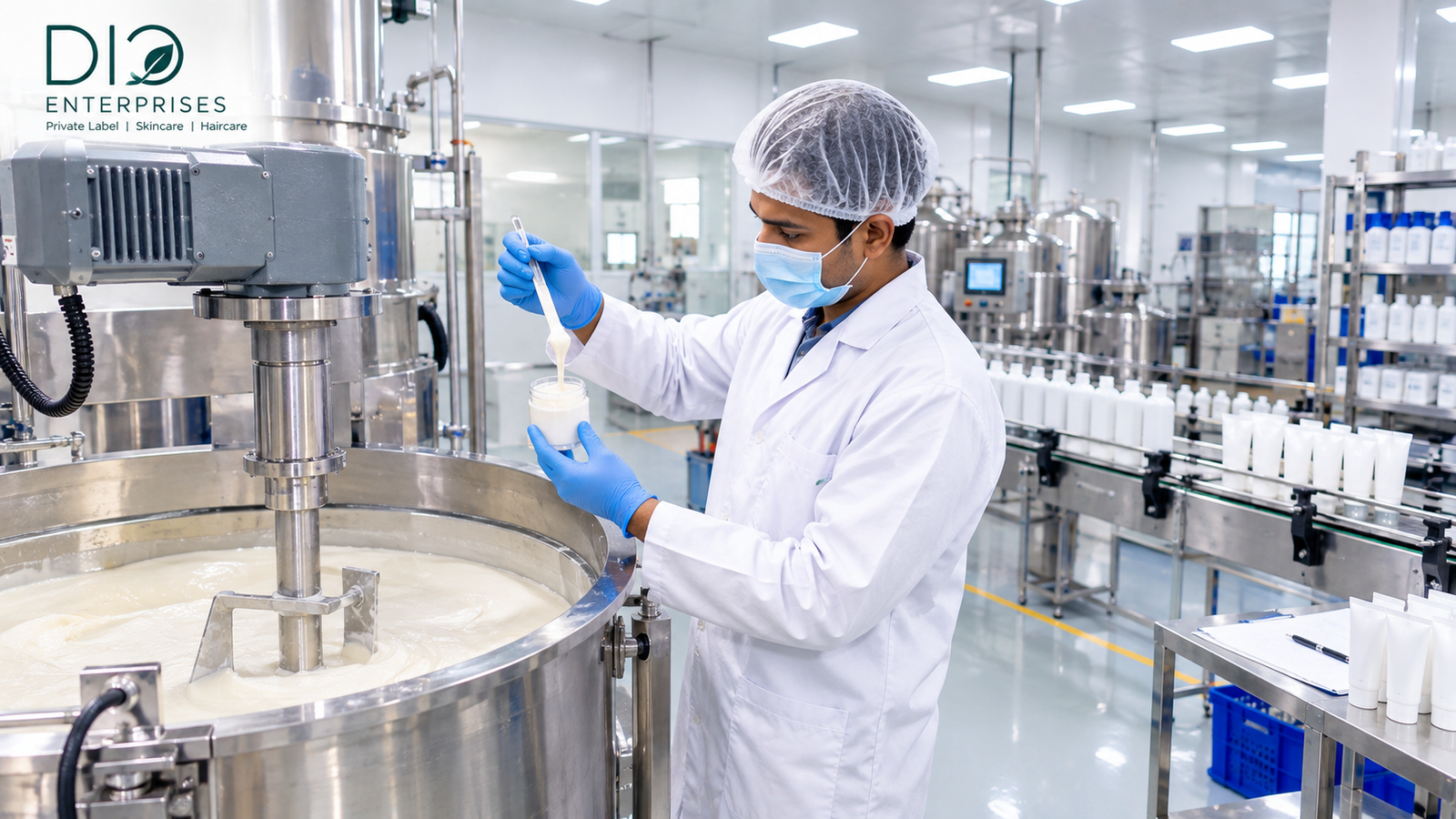
Shampoo looks like an easy product to start with. Everyone uses it, the shelf is crowded, and the formula seems like something any factory can mix. Then a founder sits down to plan a launch and finds out how many decisions hide behind one bottle: the base, the actives, the fragrance, the viscosity, the pack, the legal standards. If you are looking for a hair care third party manufacturer Bangalore brands can rely on, it helps to know what a good one actually does before you ask for a quote.
This guide covers how contract hair care manufacturing works in India, the standards that apply to shampoos and hair oils, what drives the cost, and how D10 Enterprises fits if you build your brand in Bangalore and manufacture elsewhere.
Why Bangalore Brands Manufacture Outside the City
Bangalore has a young, style aware customer base, strong online shopping habits and plenty of design and marketing talent. What it lacks is affordable industrial space for large mixing tanks, filling lines and storage for raw materials and finished stock. So most Bangalore beauty brands run sales and marketing in the city and produce in a licensed factory somewhere else.
D10 Enterprises works from Ajit Nagar, Ambala Cantt, Haryana. It has no Bangalore unit. For you, the useful question is not where the factory sits but whether samples, approvals and dispatches can run smoothly over calls, email and freight.
What Contract Hair Care Manufacturing Covers
A contract cosmetics producer makes your product in its own licensed facility and hands you finished, labelled stock. You keep the brand, the customers and the marketing. Hair care covers a wide spread: shampoos, conditioners, hair oils, hair serums, masks and styling products. D10 has a dedicated hair care manufacturing page, and it also lists personal care, serum, cream and baby products among its categories. The wider product catalog shows the full range.
That spread is handy for a brand that wants to grow from one hero product into a small range under one manufacturer.

The Rules Behind a Bottle of Shampoo
In India, cosmetics are governed by the Drugs and Cosmetics Act, 1940 and the Cosmetics Rules, 2020, which cover manufacture, testing, labelling and sale. A factory needs a valid cosmetics manufacturing licence, and you should ask to see it.
The part many founders miss is the BIS layer. The Ninth Schedule of the Cosmetics Rules lists 37 Indian product standards that cosmetics in covered categories must meet. For hair care, those include standards for shampoos (such as IS 7884), hair oils (IS 7123) and hair creams (IS 7679). Ingredients are also guided by the IS 4707 series, which works through lists of allowed and restricted materials. So when you brief a manufacturer on a shampoo, the formula has to fit these standards, not just look good in the bottle.
There is one more trap: claims. A shampoo that cleans and leaves hair soft is a cosmetic. Products with strong treatment claims, such as anti-dandruff or hair loss treatment, sit closer to the line between cosmetic and drug, and sources describe the outcome as depending on the exact claims made. Decide early, with your manufacturer, whether your product will stay cosmetic. D10 lists regulatory operations and support and a quality, safety and compliance programme, so raise this in your first conversation.
White Label Shampoo Services Versus Custom Formulation
White label shampoo services mean picking a base the manufacturer already makes, perhaps a mild daily shampoo or a hair oil, and putting your brand name on it. It is quick, minimum orders tend to be lower, and there is no development fee. It suits a founder whose edge will be branding, content and distribution.
Custom formulation means the manufacturer’s team builds or tweaks a formula for your brief: a sulphate free shampoo, a herbal oil blend, a conditioner for humid weather. It takes longer and needs more sample rounds, but it gives you a product competitors cannot simply copy. D10 lists custom formulation solutions and private branding and labeling as separate services, so you can start with one and move to the other.
Loan Licensing as Your Brand Grows
If you later want more regulatory control, D10 also lists loan licensing services. Under this model you hold the manufacturing licence yourself and use an already licensed factory’s equipment and staff. It is usually a second stage decision, not something a first launch needs.
How the Process Usually Runs
You share a brief: product type, hair concern, texture, fragrance direction, pack style and first order size. The manufacturer proposes a formula and sends samples. You test them on real hair, ask for changes and approve one. Packaging and label artwork are finalised and checked against labelling rules. Production then runs in batches, each batch is tested and cleared, and the stock is dispatched.
For a Bangalore brand, ask about packaging that survives freight. Leaking caps and cracked bottles are one of the commonest and most avoidable problems in hair care shipments.
Questions Worth Asking a Beauty Product Contract Manufacturer
- Do you hold a valid cosmetics manufacturing licence for hair care products?
- How do you meet the BIS standards for shampoos and hair oils?
- Have you made a formula like mine before?
- What is the minimum order quantity for a first batch?
- How many sample rounds are included?
- How do you test pH, viscosity and stability?
- How is the stock packed for transit to Bangalore, and how long does dispatch take?
What Shapes the Price
Cost depends on the surfactant base and actives, fragrance, batch size, bottle or tube type, pump or flip cap, label printing, testing and freight. Packaging often takes a bigger share than founders expect. Ask for a written breakdown by stage, so two quotes can be compared fairly.
Common Mistakes
The first is choosing on price alone, which often means a stock formula with weak testing. The second is making treatment claims on the label without checking how they affect classification. The third is skipping stability checks, so a shampoo separates or changes colour after a few weeks. The fourth is launching with too many products at once. One or two good products teach you more.
Getting Started
Before contacting any manufacturer, write a short brief: product type, target customer, hair concern, fragrance and texture preference, pack style, first order size and launch date.
To speak with D10 Enterprises, read the about page first, then reach them through the contact page, by phone on +91-7988374621, or by email at d10enterprisesambala@gmail.com. The address is 226/2 and 226/3, Ajit Nagar, Ambala Cantt, Haryana 133001. You can also start from the D10 Enterprises homepage.