A face cream is the most familiar product in any skincare range, and that familiarity is a trap. Every customer has an opinion on texture, smell and how it feels at the end of a hot day. Every regulator has an opinion on what is allowed inside the jar. If you are looking for a face cream third party manufacturer Kolkata brands can trust, the factory you pick shapes both of those things, so it is worth knowing what to ask.
This guide covers how contract manufacturing works for face creams, the ingredient rules that matter most, how to handle brightening and sunscreen style claims, and what to ask D10 Enterprises if you plan to build your brand in Kolkata and manufacture elsewhere.
Why Kolkata Brands Manufacture Outside the City
Kolkata has loyal skincare customers, a long habit of trusting familiar products and plenty of retail and pharmacy reach. What it does not have is affordable space for clean mixing rooms, filling lines and raw material storage. So most beauty brands here run sales and marketing locally and use a licensed factory in another state.
D10 Enterprises works from Ajit Nagar, Ambala Cantt, Haryana, and has no Kolkata facility. For a brand owner, what matters is honest communication, quick samples and dispatch that arrives on time.
What D10 Lists for Creams
According to its website, D10 Enterprises has a dedicated cream manufacturing page, alongside serum, face wash, face scrub, derma cosmetics, organic cosmetics, herbal cosmetics, colour cosmetics, hair care, personal care and baby products. A brand planning a small range, such as a day cream, a night cream and a face wash, can see whether one manufacturer covers all of it. The product catalog shows the wider list.
The Rules Behind a Jar of Cream
In India, cosmetics are regulated under the Drugs and Cosmetics Act, 1940 and the Cosmetics Rules, 2020. The factory needs a valid cosmetics manufacturing licence, and you should ask to see it. Skin creams are also named among the product categories with a mandatory BIS standard in the Ninth Schedule of the Rules, IS 6608, which sets requirements for the product. Ingredients are guided by the IS 4707 lists of prohibited and restricted materials.
So when you brief a manufacturer, the formula has to fit these standards, not just feel good on the skin. Ask how they meet the skin cream standard and ask to see the test reports for your batch.
Mercury and Skin Lightening: The Biggest Risk
Face creams that promise brightening are where the law bites hardest. Mercury compounds are prohibited in cosmetics in India, and unintentional mercury in a finished cosmetic is capped at 1 ppm. Despite that, an NGO study found mercury above that limit in some skin lightening creams sold in Indian markets and online. A brand that sells such a cream carries the risk, whatever the factory says.
Hydroquinone is another ingredient to handle with care. Compliance sources describe it as prohibited or tightly restricted in leave-on skin lightening cosmetics, with medical use treated as a pharmaceutical matter. Do not assume a skin lightening formula with hydroquinone is acceptable. Ask your manufacturer to confirm every active against the current IS 4707 lists before you spend on samples.
The same caution applies to wording. A cream that claims to improve the look of uneven skin tone sits in cosmetic territory. A cream that claims to treat melasma moves toward a drug. Claims must not convey anything false or misleading under Rule 36 of the Cosmetics Rules.
SPF Creams Need Extra Care
If your cream carries an SPF claim, the UV filters must be permitted and the SPF claim needs proper testing behind it. Ask your manufacturer which filters they use and what test data they can share. Do not print a number you cannot back up.
What a Contract Skincare Producer Should Offer
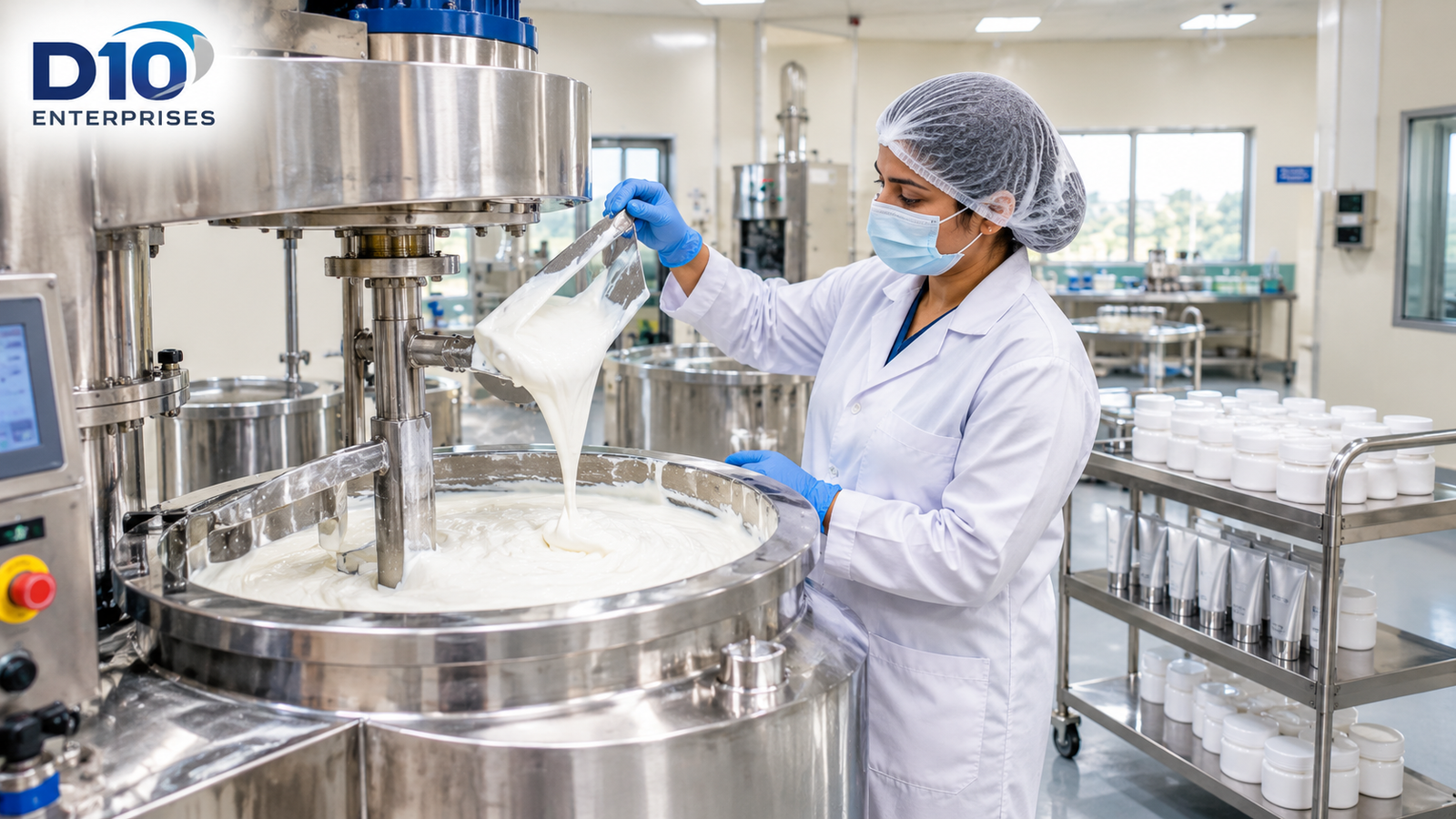
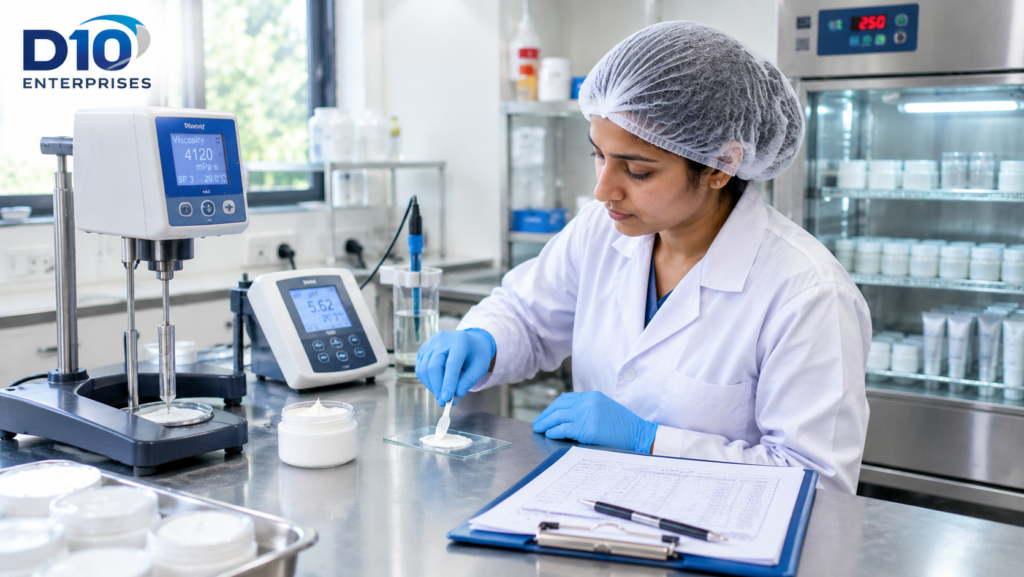
A good contract skincare producer does more than fill jars. Look for a formulation team that can build a stable emulsion, documented batch testing, preservation that protects the cream without irritating skin, private labeling and packaging options suited to a cream, whether a jar, a tube or an airless pump.
D10 describes its work as GMP standard production with quality control, alongside custom formulation solutions, private branding and labeling, regulatory operations and support, a quality, safety and compliance programme and loan licensing services. Ask what documents sit behind each.
White Label Cosmetics Services Versus Custom Formulation
White label cosmetics services mean choosing a cream base the manufacturer already makes and putting your brand on it. It is quicker, with lower minimum orders and no development time. It suits a founder whose edge is branding, content and distribution.
Custom formulation builds a cream around your brief: a particular active, a lighter gel cream for humid weather, a richer night cream for dry skin, a fragrance free version for sensitive skin. It takes longer and needs more sample rounds, but the product is yours alone.
How the Process Usually Runs
You send a brief: skin type, texture, actives, fragrance, pack style and first order size. The manufacturer proposes a formula and sends samples. You test them on real skin over weeks and ask for changes. After approval, packaging and label artwork are finalised and checked against the labelling rules and your claims. Production runs in batches, each is tested, and finished stock is dispatched.
For a Kolkata brand, ask about stability in humid weather. Creams can separate or grow microbes if preservation and packaging are weak, and the monsoon tests both.
Questions to Ask a Beauty Product Manufacturer
- Do you hold a valid cosmetics manufacturing licence?
- How do you meet the BIS standard for skin creams?
- Will you check every active against the current prohibited and restricted lists?
- Do you test finished batches for heavy metals, including mercury?
- How do you test stability and preservation?
- Will you review my claims before printing?
- What is the minimum order quantity, and how long does dispatch to Kolkata take?
What Shapes the Price
Cost depends on the actives and their quality, batch size, packaging, label printing, testing and freight. Jars, tubes and airless pumps cost very differently, and packaging often takes a bigger share than founders expect. Ask for a written breakdown by stage so you can compare quotes properly.
Common Mistakes
The first is launching a brightening cream without checking every active against the prohibited lists. The second is making treatment claims on a cosmetic. The third is printing an SPF number without test data. The fourth is skipping stability testing in humid conditions. The fifth is picking a factory on price without seeing its licence.
Getting Started
Before contacting any manufacturer, write a short brief: skin type, texture, key actives, fragrance preference, pack style, intended claims, first order size and launch date.
To speak with D10 Enterprises, read the about page first, then reach them through the contact page, by phone on +91-7988374621, or by email at d10enterprisesambala@gmail.com. The address is 226/2 and 226/3, Ajit Nagar, Ambala Cantt, Haryana 133001. You can also start from the D10 Enterprises homepage.