Glucose powder is one of the oldest products in Indian homes. People take it in summer, after a long day, during a fast, on a sports field, usually stirred into water without a second thought. That familiarity makes it a good product to launch and an easy one to get wrong. If you are searching for a glucose powder third party manufacturer Delhi brands can work with, the main risks are not in the factory. They are in the name, the claims and the label.
This guide covers how contract manufacturing works for drink powders, why one word on the pack can get you into trouble, how to choose a format and what to ask D10 Enterprises if you plan to build your brand in Delhi and manufacture elsewhere.
Why Delhi Brands Manufacture Outside the City
Delhi has a huge summer market for energy and hydration products, a busy gym and sports scene and strong online selling. It does not have affordable space for blending halls, pouch filling lines and storage. So most beverage and supplement brands in the capital region handle marketing and sales at home and use a licensed factory elsewhere.
D10 Enterprises works from Ajit Nagar, Ambala Cantt, Haryana, and has no Delhi facility. For a brand owner, what matters is honest communication, good samples and dispatch that arrives on time.
What D10 Lists, and What to Confirm
According to its website, D10 Enterprises lists nutraceutical formats on its nutraceuticals manufacturing page: syrup, softgel capsules, protein powders and mouth spray. The nutraceutical catalogue shared by the company also covers tablets and capsules, sachets, syrups, powders and oral spray, and gummies are part of what D10 makes as well. The product catalog shows the wider range.
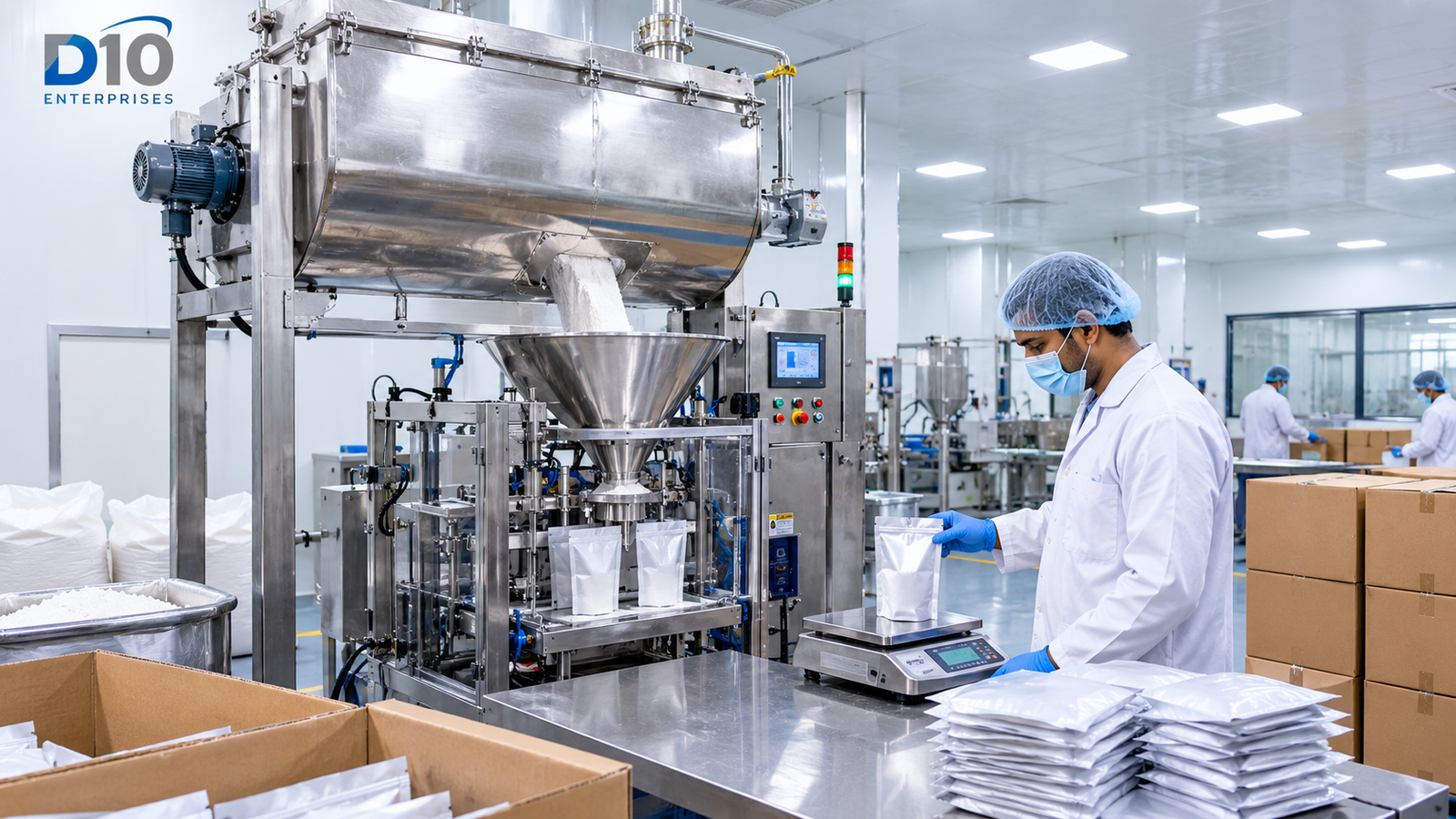
A glucose or energy drink powder is a dry blend packed in sachets, pouches or tubs, which overlaps with the powder and sachet formats D10 lists. The public pages do not describe a glucose powder range, though. So make that your first question: ask whether D10 can make your product, which FSSAI standard it follows and what the minimum order is. Ask for samples before you commit.

The Word That Can Sink a Glucose Powder: “ORS”
Here is the part many founders do not know. Last October, FSSAI barred food companies from using the term “ORS” on products that do not meet the WHO formula, and clarified that using “ORS” in the name of any food product, even with a prefix or suffix, is misleading labelling under the Food Safety and Standards Act, 2006. The regulator withdrew earlier permissions that had allowed the term with a disclaimer. The Delhi High Court later made clear it would not interfere with the ban.
The reason is health. The WHO formula for oral rehydration salts is exact, per litre it contains sodium chloride 2.6 g, potassium chloride 1.5 g, trisodium citrate 2.9 g and anhydrous glucose 13.5 g. FSSAI has said that a high sugar drink can worsen dehydration instead of relieving it. A glucose powder is mostly sugar and is not an oral rehydration product.
The practical rule is simple. Do not use “ORS” anywhere in your name, tagline or packaging, and do not suggest your powder treats dehydration. Avoid words like “rehydration solution” as well, unless your product genuinely meets the formula and the right regulatory route. Ask your manufacturer to review your product name and claims before you print anything.
Claims: “Instant Energy” Needs Care
“Instant energy” is the phrase customers search for and the phrase regulators look at. FSSAI’s Advertising and Claims Regulations, 2018 allow nutritional and health claims listed in the regulation, and other claims need prior approval and scientific backing. A statement about what the product contains is safer than a promise about what it will do to the body. Have each line reviewed.
D10 lists regulatory operations and support and a quality, safety and compliance programme, so ask exactly what they check. Also ask to see the factory’s FSSAI licence and confirm it covers your product type. If your product is positioned as a health supplement rather than a food, the 2022 nutraceutical regulations apply, including the “HEALTH SUPPLEMENT” label wording.
Responsible Labelling for a Sugar Based Product
A glucose powder is, in plain terms, sugar. A good label shows the serving size and nutrition clearly, so a customer can see what a scoop contains. It is wise to avoid marketing that targets children or implies the product suits people managing blood sugar, and to suggest customers with a medical condition speak to a doctor. This is good ethics, and it also lowers your regulatory risk.
White Label Beverage Services Versus Custom Formulation
White label beverage services mean choosing a powder the manufacturer already makes and putting your brand on it. It is quicker, with lower minimum orders and no development time.
Custom formulation builds a blend around your brief, such as added vitamins, minerals, a flavour or a lower sugar version. It takes longer and needs more sample rounds, particularly for taste and solubility. D10 lists custom formulation solutions and private branding and labeling as separate services. If you later want to hold your own licence, it also lists loan licensing services.
How the Process Usually Runs
You send a brief: flavour, any added ingredients, pack size, target customer and first order size. The manufacturer proposes a recipe and sends samples. You test them in water, check taste, sweetness and how well the powder dissolves, and ask for changes. After approval, packaging and label artwork are finalised and checked for naming, claims and nutrition details. Production runs in batches, each is tested, and finished stock is dispatched.
For a Delhi brand, ask about packing for summer heat. Glucose powder is hygroscopic, which means it absorbs moisture and clumps, so sealed pouches and tubs with good barriers matter.
Questions to Ask a Drink Powder Contract Manufacturer
- Do you hold an FSSAI licence that covers my product type?
- Have you made glucose or energy drink powders before?
- Which FSSAI standard does my product follow?
- Will you review my product name and claims before printing?
- How do you control moisture and test for clumping?
- What packaging do you recommend for Delhi’s heat?
- What is the minimum order quantity, and how long does dispatch to Delhi take?
What Shapes the Price
Cost depends on the ingredients, flavouring, batch size, packaging, label printing, testing and freight. Barrier pouches and tubs cost more than plain bags but protect the product. Ask for a written breakdown by stage so you can compare quotes properly.
Common Mistakes
The first is putting “ORS” or a rehydration claim on a glucose powder. The second is making health claims that are not allowed. The third is using packaging that lets moisture in, so the powder turns to a brick in summer. The fourth is skipping taste and dissolving tests. The fifth is picking a factory on price without seeing its licence.
Getting Started
Before contacting any manufacturer, write a short brief: flavour, added ingredients, pack size and type, target customer, intended claims, first order size and launch date.
To speak with D10 Enterprises, read the about page first, then reach them through the contact page, by phone on +91-7988374621, or by email at d10enterprisesambala@gmail.com. The address is 226/2 and 226/3, Ajit Nagar, Ambala Cantt, Haryana 133001. You can also start from the D10 Enterprises homepage.