Collagen is one of those supplements everyone seems to know about and few founders know how to launch. The customer wants smoother skin and stronger joints. The founder wants a clean label and a good margin. And between the two sits a long list of decisions: where the collagen comes from, which format sells, what the label may say, and who is actually going to make it. If you are searching for a collagen third party manufacturer Bangalore brands can work with, this guide will help you ask the right questions first.
It covers how contract manufacturing works for collagen products, the label rules that catch people out, how to pick a format, and what to ask D10 Enterprises if you plan to build your brand in Bangalore and manufacture elsewhere.
Why Bangalore Brands Manufacture Outside the City
Bangalore has an active online shopping culture, a young wellness audience and plenty of design and content talent. It does not have affordable factory space for blending rooms, filling lines and clean storage. So most supplement brands here run marketing and sales locally and use a licensed factory in another state.
D10 Enterprises works from Ajit Nagar, Ambala Cantt, Haryana, and has no Bangalore unit. For a brand owner, what counts is honest communication, good samples and dispatch that arrives on time.
What D10 Lists, and What to Confirm
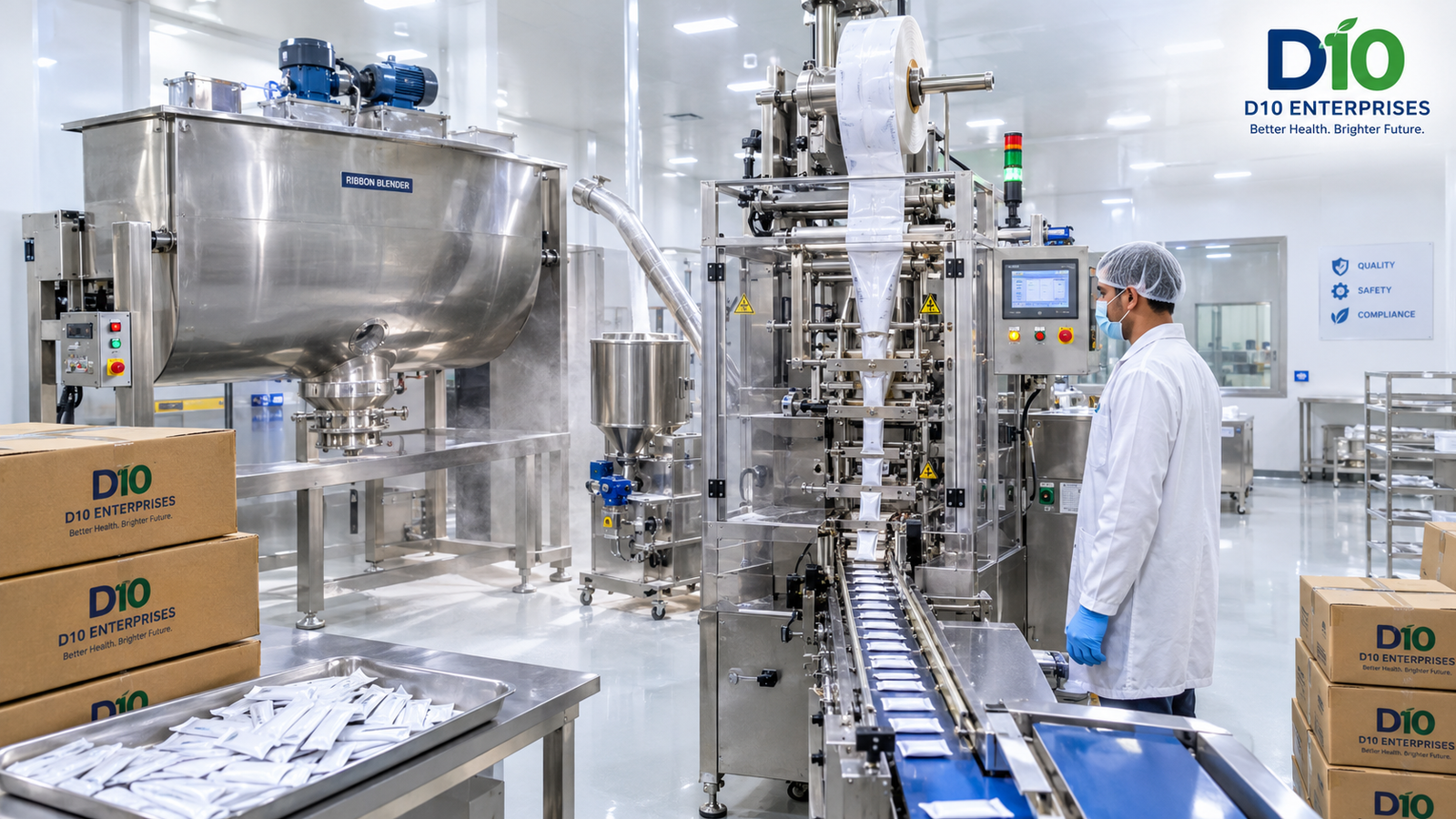
According to its website, D10 Enterprises manufactures nutraceuticals in the formats listed on its nutraceuticals manufacturing page: syrup, softgel capsules, protein powders and mouth spray. The nutraceutical catalogue shared by the company also covers tablets and capsules, sachets, syrups, powders and oral spray, and gummies are part of what D10 makes as well. The product catalog shows the wider range.
Collagen products are commonly sold as powders, sachets, gummies and capsules, so those formats overlap with what D10 lists. What the public pages do not say is which collagen ingredients D10 has worked with. So treat that as your first question: ask whether they can work with the specific collagen ingredient you have in mind, and ask for samples before you commit to anything.
The Label Rule That Surprises Collagen Brands
Collagen is made from animal sources, commonly bovine or marine. That has a direct effect on your label. Under the Food Safety and Standards (Packaging and Labelling) Regulations, 2011, a product containing ingredients of animal origin must carry the non-vegetarian logo, and FSSAI has said that products using animal-origin ingredients with the green vegetarian logo will be flagged as violations. The same issue applies to gelatine capsule shells, so ask what the shell is made of if you choose capsules.
There are also market realities. One market report notes that porcine collagen faces stronger religious and dietary constraints in India, which is why many brands choose bovine or marine sources and state the source clearly.
Beyond that, the usual supplement rules apply. Health supplements follow the FSSAI 2022 nutraceutical regulations, the label must carry the words “HEALTH SUPPLEMENT” in capital, bold letters close to the product name, and ingredients not listed or permitted for health supplements need FSSAI approval before manufacture. Health supplement manufacturing also falls under FSSAI’s mandatory Central License category, so ask to see the factory’s licence. D10 lists regulatory operations and support and a quality, safety and compliance programme, so ask which of these checks they handle for you.
Skin Health Claims: Be Careful
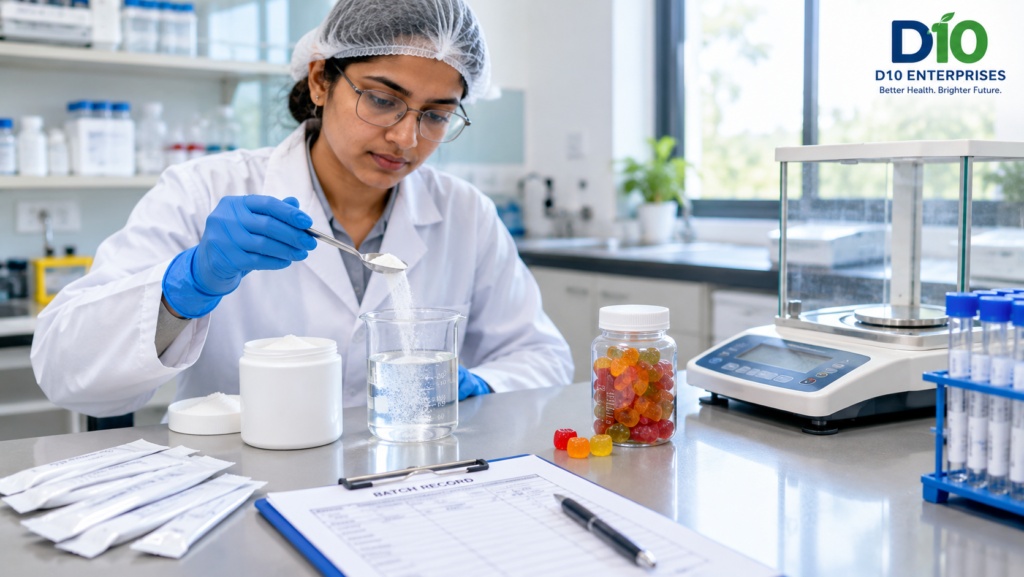
Collagen is bought for skin, hair, nails and joints, so the temptation to promise results is strong. Resist it. FSSAI’s claims regulations allow nutritional and health claims that are listed in the regulation, and anything else needs prior approval from the Food Authority. Claims also need scientific backing. A manufacturer who reviews your wording before it goes to print is protecting you from a real risk.
Choosing a Format
Powders and sachets suit collagen well, because the dose is often large and mixing into water or a drink is easy. Gummies suit customers who dislike powders, though a gummy can only carry a small amount per piece, so check the dose per serving against what you plan to promise. Capsules and tablets are stable and easy to carry, but several are needed for a full serving. Many brands start with one format and add a second once the first sells.
White Label Collagen Services Versus Custom Formulation
White label collagen services mean choosing a formula the manufacturer already makes and putting your brand on it. It is quicker, with lower minimum orders and no development time.
Custom formulation means a blend built around your brief, such as collagen with vitamin C, flavour choices or a sugar free version. It takes longer and needs more sample rounds, particularly for taste, because collagen powders can have a noticeable flavour that needs masking. D10 lists custom formulation solutions and private branding and labeling as separate services. If you later want your own licence, it also lists loan licensing services.
How the Process Usually Runs
You send a brief: format, collagen source, other ingredients, flavour, target customer, pack style and first order size. The manufacturer checks the ingredients against permitted lists, proposes a recipe and sends samples. After approval, packaging and label artwork are finalised, with the veg or non-veg logo, claims and warnings checked. Production runs in batches, each batch is tested, and finished stock is dispatched.
For a Bangalore brand, ask about packing. Powders absorb moisture, so sealed sachets and tubs with desiccants protect the product through humid weather.
Questions to Ask a Contract Beauty Product Producer
- Do you hold a Central FSSAI licence covering health supplements?
- Have you worked with my type of collagen ingredient before?
- Which source can you use, and how is it documented?
- How do you check that each serving carries the stated amount?
- What is the minimum order quantity for a first batch?
- Will you review my label, including the veg or non-veg logo and claims?
- How do you pack powders against moisture, and how long does dispatch take?
What Shapes the Price
Cost depends on the collagen source and quality, other ingredients, format, batch size, packaging, label printing, testing and freight. Marine and bovine sources differ in price, and the dose per serving drives cost more than almost anything else. Ask for a written breakdown by stage so you can compare quotes properly.
Common Mistakes
The first is using the green vegetarian logo on an animal-origin product. The second is promising skin results the label cannot legally support. The third is not checking the dose per serving against your marketing. The fourth is skipping taste testing, so the powder sells once and never again. The fifth is picking a factory on price without seeing its licence.
Getting Started
Before contacting any manufacturer, write a short brief: format, collagen source, other ingredients, flavour, target customer, pack style, first order size and launch date.
To speak with D10 Enterprises, read the about page first, then reach them through the contact page, by phone on +91-7988374621, or by email at d10enterprisesambala@gmail.com. The address is 226/2 and 226/3, Ajit Nagar, Ambala Cantt, Haryana 133001. You can also start from the D10 Enterprises homepage.